NBA Accreditation Peer Team Visit was conducted from 15 - 17 May 2026 | Evaluated UG Programs: CSE, ECE, IT, Mechanical | Tier-II Accreditation.

📅 Upcoming Events

About the Department

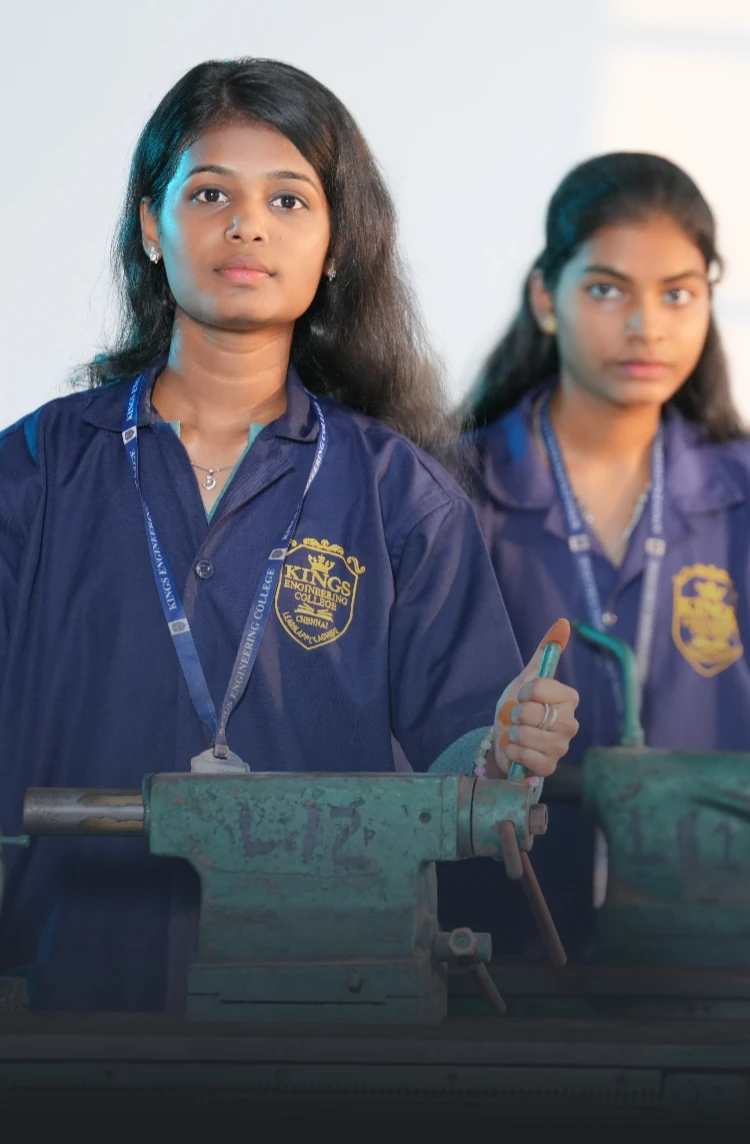
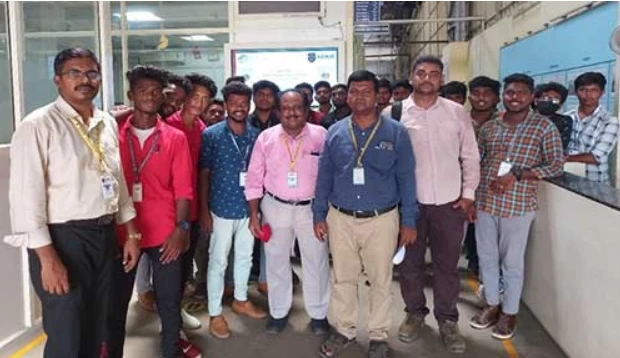
The Mechanical Engineering Department was established in 2001. It aims to provide students with the knowledge and skills necessary to excel in the field of mechanical engineering. This branch of engineering deals with the design, analysis, manufacturing, and maintenance of mechanical systems. The department's faculty members are experienced professionals with diverse backgrounds, including industry and academia. They are responsible for delivering lectures, conducting research, and guiding students in their academic pursuits. Many faculty members engage in research projects, which not only advance knowledge in the field but also provide opportunities for students to participate in cutting-edge research. The department invites industry experts as guest speakers to share their experiences and provide insights into the latest developments in mechanical engineering. Every year, the department organizes workshops, industrial visits, internships, and symposiums to keep students updated with the latest trends and upcoming technological developments.
Vision

VisionVision

The vision of the department is to impart quality technical education for promoting centre of excellence in core field through which the professional experts can be produced in order to carter the needs of the industry.

VisionMission

  • Arrow

    To develop the problem solving and analytical skill of the students in the field of Mechanical Engineering with a sound knowledge of basic science and Engineering.

  • Arrow

    To create an arena that encourages exploration, curiosity and creativity of the Students to become an intensive researcher in their domain.

  • Arrow

    To impart the qualities among the students to become a successful team player, Leader and professional challenger in the area of Entrepreneurship.

  • Arrow

    To inculcate the virtue of social responsibility and professional ethics.

  • Arrow

    To motivate the students towards solving problems related to design, analysis and implementation of mechanical systems.

HOD Message

As the Head of the Mechanical Engineering Department, Our department has always been a beacon of innovation and practical learning, and it is your relentless pursuit of knowledge and your passion for engineering that makes this possible. Your efforts and achievements have not only raised the bar for academic excellence but have also significantly contributed to making our department one of the most respected in the institution. As we continue to navigate through these challenging times, I want to assure you that our commitment to providing a world-class education and research environment remains unwavering. We will continue to support each one of you in your academic journey, ensuring that you have the necessary resources and opportunities to succeed. Let us continue to strive for excellence, uphold the highest standards of integrity and professionalism, and work together to further enhance the reputation of our esteemed department.

Faculty List

S.No.Name of the Faculty MemberDesignation
1Dr. Vijayakumar M Professor
2Mr. Joel Jobes RAssistant Professor
3Mr. Nandhagopal JAssistant Professor
4Mr. Krishna moorthy NAssistant Professor
5Mr. Thamilselvan DAssistant Professor
6Mr. Kanmani DAssistant Professor

Programme Outcomes (POs)

PO1
Engineering Knowledge
An ability to apply knowledge of mathematics, science, and engineering in the mechanical field.
PO2
Problem Analysis
An ability to design and conduct experiments, as well as to analyze and interpret data with acquired knowledge.
PO3
Design/Development of Solution
An ability to design a system, component, or process to meet desired needs within realistic constraints such as economic, environmental, social, ethical, health, safety, manufacturability, and sustainability.
PO4
Conduct Investigations of Complex Problems
An ability to function on multidisciplinary teams with potential willpower.
PO5
Modern Tool Usage
An ability to identify, formulate, and solve engineering problems.
PO6
The Engineer and Safety
An understanding of professional and ethical responsibility in society.
PO7
Environment and Sustainability
An ability to communicate effectively and interactively with different people.
PO8
Ethics
An ability to understand the impact of engineering solutions in global, economic, environmental, and societal contexts.
PO9
Individual and Team Work
Recognition of the need for and ability to engage in lifelong learning.
PO10
Communication
An ability to use technologies, skills, and modern engineering tools necessary for engineering practice in their field of application.
PO11
Project Management and Finance
To enhance the industry-institute interrelationship through various design and fabrication projects, which are useful to the industry.
PO12
Lifelong Learning
To encourage entrepreneurship goals through curriculum, practical-based projects, and comprehension courses.

Program Specific Objectives (PSOs)

PSO1
To apply, analyze, design, and develop solutions by applying fundamental concepts of mechanical engineering.
PSO2
To design principles for developing quality products for society and scientific applications.
PSO3
To adapt emerging design concepts and technologies to innovate and provide solutions to novel problems.

Program Educational Objectives (PEOs)

PEO1
To apply core mechanical engineering knowledge and scientific principles to solve complex engineering problems and pursue research or higher studies.
PEO2
To demonstrate innovation and creativity to develop new technologies and research in mechanical systems.
PEO3
To excel as professionals, team players, leaders, and entrepreneurs in multidisciplinary environments.
PEO4
To excel the graduates in ethical values and contribute to society through sustainable and responsible engineering practices.
PEO5
To engage in lifelong learning to adapt to technological advancements and ensure continuous career growth.

Academic Time Table

document
Time Table
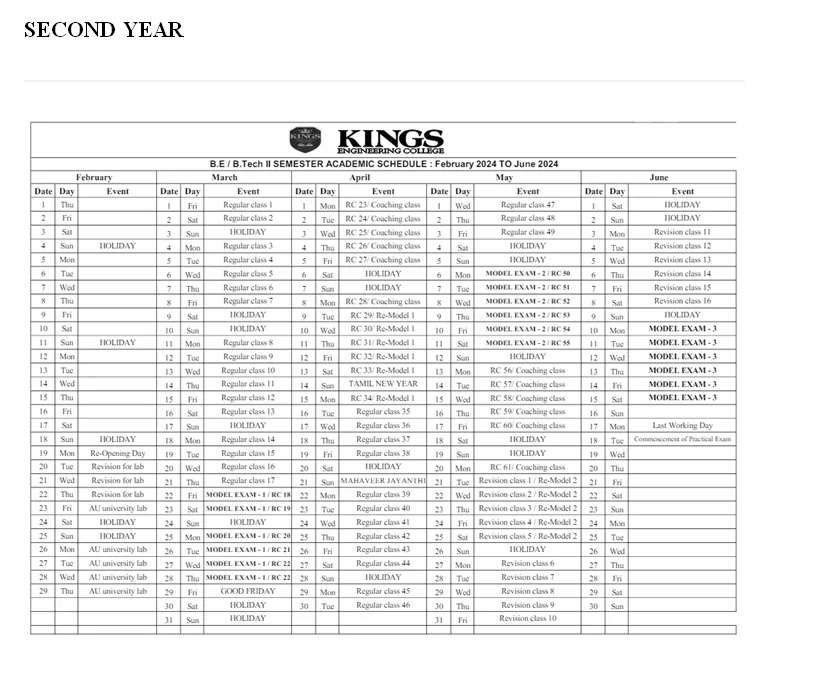
Second year Schedule
maximize
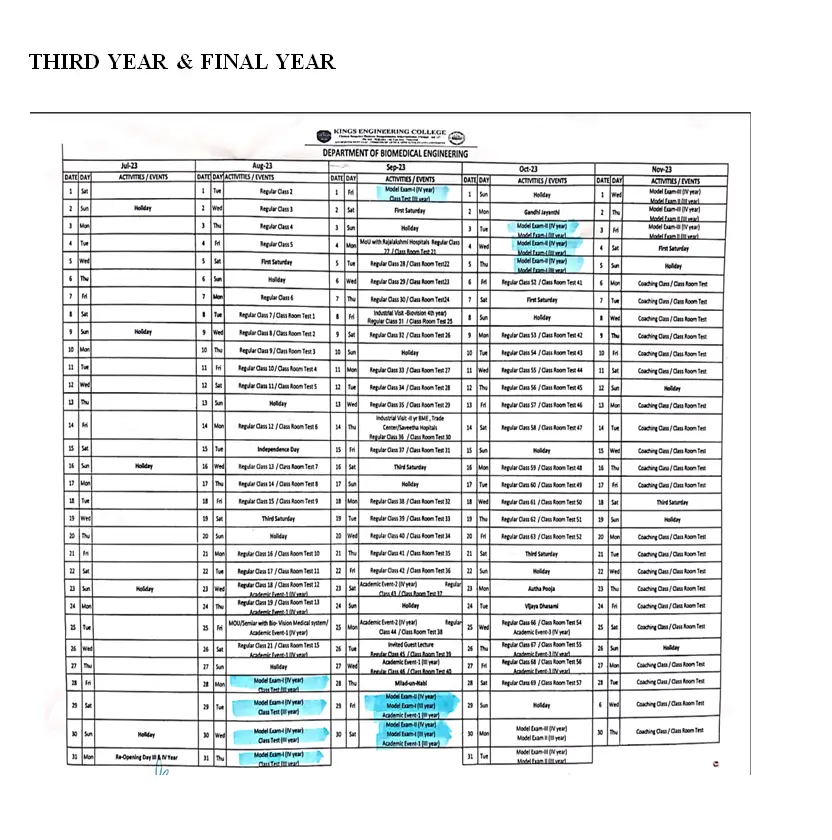
Third year Schedule
maximize

Syllabus

document
Regulation 2024
document
Regulation 2021
document
Regulation 2017

Infrastructure Facilities

Facilities

S.No.FacilityCountTotal Area in Sq.m
1Class Rooms3235
2Tutorial Room180
3Labs6765
4Smart Class Rooms3235
5Auditorium / Seminar hall1102
6Video Conferencing Room11
7Workshop1263
8Drawing Hall21094
9Research Lab11
10HOD's Cabin119
11Department Library140
12Faculty Cabin1442
13Counseling Room119

Department Library

Department library furnished with 1200 books. Project reports, mini project reports, research papers, and lectures materials. It has various Mechanical Engineering books related to major area of Design, Manufacturing, Thermal, Material Science, etc.., from different authors, Journals, CD’s and Magazines for students reference. NPTEL video library and lectures also effectively utilized by the students.

Engineering Practice Laboratory

library
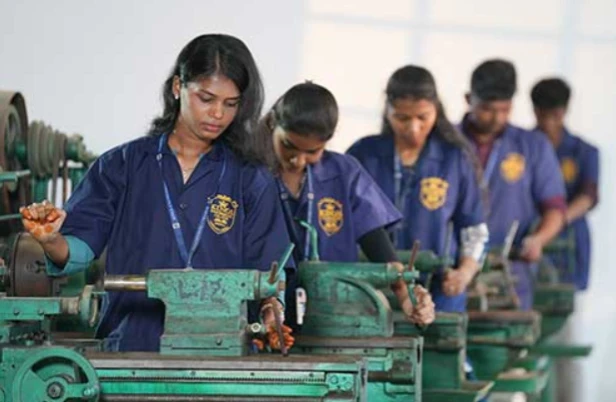
It’s designed to provide students with hands-on experience in various engineering practices and to develop their understanding of how theoretical concepts are applied in real-world scenarios. Here are some key points. The lab is common to all engineering departments including Civil, CSE, ECE, EEE, and Mechanical. The lab manual is provided in a PDF format to make understanding of the lab easier and to develop the students’ knowledge.
The lab involves various practices depending on the department. For instance, Civil Engineering practices might include plumbing work and woodwork, while Electrical Engineering practices might involve switch board wiring, staircase wiring, fluorescent lamp wiring, and energy meter wiring. The lab aims to give students the basic working knowledge required for the production of various engineering products. It explains the construction, function, use, and application of different working tools, equipment, machines, as well as the technique of manufacturing a product from its raw material.

CAD / CAM and Simulation Laboratory

library
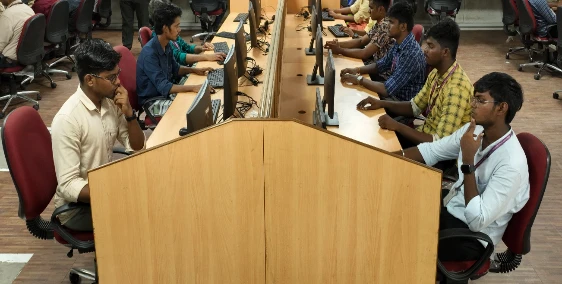
It’s designed to provide students with hands-on experience in Computer-Aided Design (CAD) and Computer-Aided Manufacturing (CAM). The lab involves various practices depending on the department. For instance, Mechanical Engineering practices might include determination of deflection and stresses in 2D and 3D trusses and beams, development of machining programs for CNC equipment, and development of PLC-based control systems for manufacturing cells. The lab aims to give students the basic working knowledge required for the production of various engineering products. It explains the construction, function, use, and application of different working tools, equipment, machines, as well as the technique of manufacturing a product from its raw material. The software like AutoCAD, CREO, SOLIDWORKS, MASTERCAM, ANSYS are available for the students to practice on.

Thermal Laboratory

A Thermal Lab, also known as a Thermal Engineering Laboratory, is a place where students can learn and experiment with the principles and concepts involved in thermal science. The purpose of a thermal engineering laboratory is to provide knowledge about thermal science, focusing on Internal Combustion Engines, Steam Generators, and Compressors. The lab is often equipped with various apparatus for conducting experiments on conduction, convection, radiation, and refrigeration systems. In these labs, students learn about the measurement of performance, retardation, heat balance, frictional power, etc. They also study and test various oil properties for use as fuel and lubricant in internal combustion engines and thermal systems. The lab often includes facilities like cut section models of 4 stroke diesel engines and 2 stroke petrol engines, Redwood Viscometer Apparatus, Saybolt Viscometer Apparatus, High-Speed Diesel Engine Test Rig, Petrol Engine Test Rig, Optimum Cooling Test Rig, Retardation Test Rig, and Heat Balance without Calorimeter Test Rig.

Strength of Material Laboratory

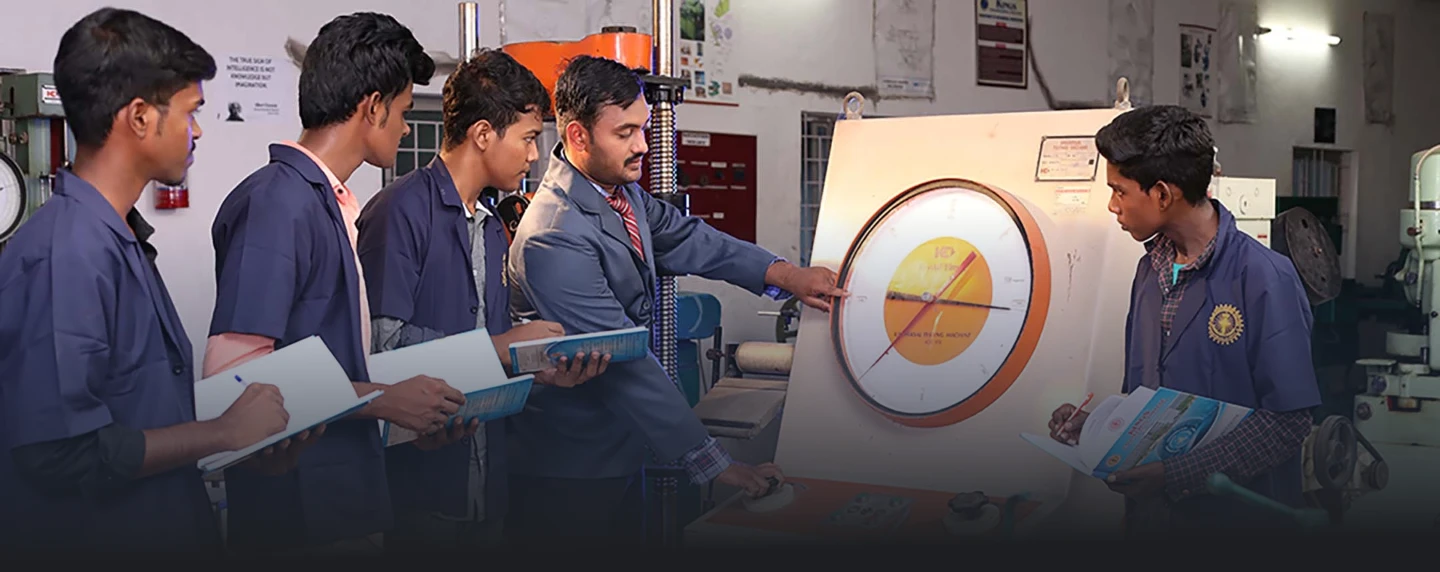
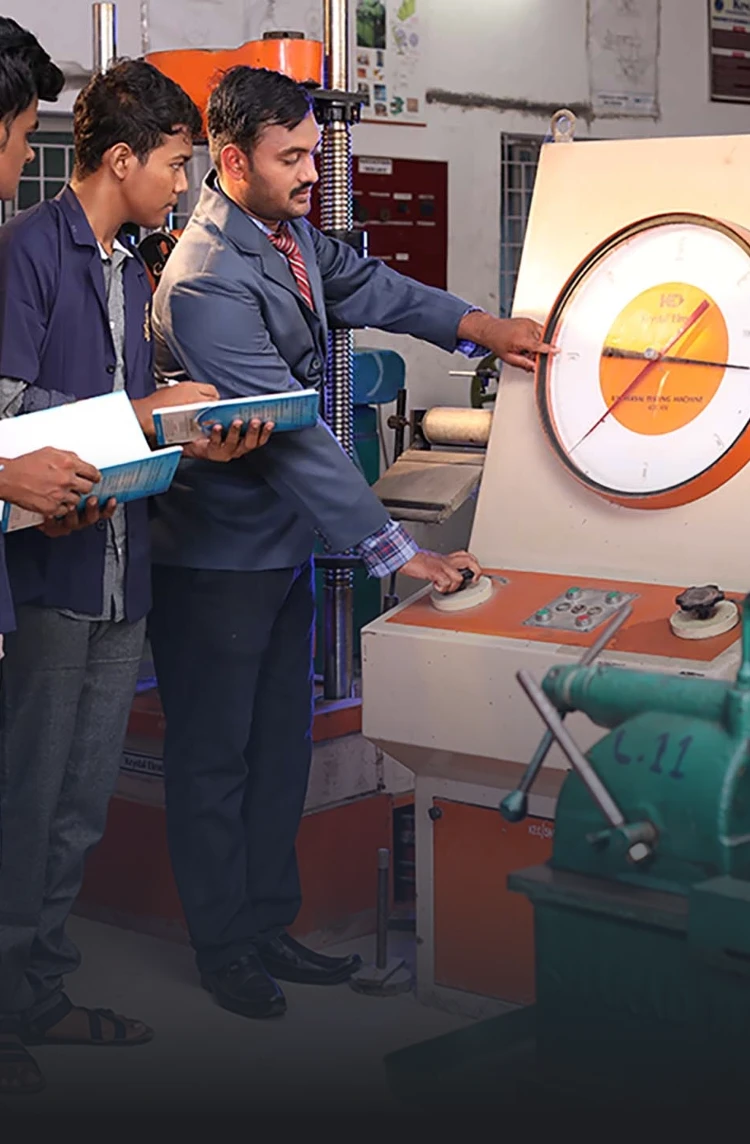
A Strength of Materials Lab, also known as a Mechanics of Materials Lab, is a place where students can learn and experiment with the principles and concepts involved in the strength of materials. The purpose of a Strength of Materials Lab is to provide knowledge about the strength of materials, focusing on the relation between internal forces, deformations and external loads. The lab is often equipped with various apparatus for conducting experiments to determine material properties such as impact strength, tensile strength, compressive strength, hardness, and so on. In these labs, students learn about the measurement of performance, retardation, heat balance, frictional power, etc. They also study and test various properties of materials under different loading conditions. The lab often includes facilities for conducting experiments like Tension Test, Bending test on (Steel / Wood) Cantilever beam, Bending test on Simply Supported Beam, Torsion Test, Hardness Test, Spring Test, Compression test on wood or concrete or bricks, Impact Test, Shear Test, Verification of Maxwell’s Reciprocal theorem on beams, Use of Electrical Resistance strain gauges, Continuous beam - Deflection test.

Fluid Mechanics Laboratory

The purpose of a Fluid Mechanics and Machinery Lab is to provide knowledge about fluid mechanics and hydraulic machinery, focusing on the relation between internal forces, deformations, and external loads. The lab is often equipped with various apparatus for conducting experiments to determine fluid properties, hydrostatic force on submerged bodies, and stability of floating bodies. In these labs, students learn about the measurement of performance, retardation, heat balance, frictional power, etc. They also study and test various properties of fluids under different loading conditions. The lab often includes facilities for conducting experiments like Verification of Bernoulli’s equation, Determination of Coefficient of discharge for a small orifice by a constant head method, Calibration of Venturimeter / Orifice Meter, Calibration of Triangular / Rectangular/Trapezoidal Notch, Determination of Minor losses in pipe flow, Determination of Friction factor of a pipe line, Determination of Energy loss in Hydraulic jump, Determination of Manning’s and Chezy’s constants for Open channel flow, Impact of jet on vanes, Performance Characteristics of Pelton-wheel turbine, Performance Characteristics of Francis turbine, Performance characteristics of Kaplan Turbine.

Dynamics Laboratory

The purpose of a Dynamics Lab is to provide knowledge about dynamics, focusing on the relation between internal forces, deformations, and external loads. The lab is often equipped with various apparatus for conducting experiments to measure and understand the basic principles of Dynamics. In these labs, students learn about the measurement of performance, retardation, heat balance, frictional power, etc. They also study and test various properties of objects under different loading conditions. The lab often includes facilities for conducting experiments like Verification of Newton’s laws, study of simple harmonic motion, study of rotational motion, study of conservation of momentum, and so on.

Materials Metallurgy and measurements Laboratory

The purpose of a Materials Metallurgy and Measurement Lab is to provide knowledge about materials science and metallurgy, focusing on the relation between internal forces, deformations, and external loads. The lab is often equipped with various apparatus for conducting experiments to measure and understand the basic principles of Materials Science and Metallurgy. In these labs, students learn about the measurement of performance, retardation, heat balance, frictional power, etc. They also study and test various properties of materials under different loading conditions. The lab often includes facilities for conducting experiments like hardness testing, quantitative measurement of constituents of structures, and electron microscopy.

Mechatronics Laboratory

library
A Mechatronics Lab is a place where students can learn and experiment with the interdisciplinary field of mechatronics, which combines mechanical engineering, electrical engineering, computer science, and control engineering.

Department Events & Activities

S.NoName of the EventDate of EventSummary
1Workshop on Additive Manufacturing22.01.2024The program aims to introduce the fundamentals and development of Additive Manufacturing (AM), along with its various business opportunities and industrial applications. It familiarizes participants with software tools, processes, and techniques used to create physical objects for product development and rapid prototyping.

The course also covers key AM processes such as vat polymerization, direct energy deposition, powder bed fusion, material extrusion, binder jetting, material jetting, and sheet lamination, along with their applications, advantages, and limitations.

Overall, participants gain knowledge of how AM technology transforms concepts into final products and understand its growing role in different industries, enabling innovation and new business opportunities.

Awards/Achievements

  • Arrow
    Our final year students (2020-2021 Batch), Mr. Ajith Kumar, Mr. Immanuel Saga, Mr. Kelvin mark, Mr. Sathish Kumar, Mr. Vignesh won 2nd prize in Design Event conducted by Saveetha School of Engineering Under the program of Vikram Sarabhai Centenary Celebrations.

Research & Development

Research Publications

Faculty NameResearch TitleYearISSN/DOI
Dr.HarikrishnanExperimental investigation of parallel type - evacuated tube solar collector using nanofluids, Taylor and Francis,ENERGY SOURCES, PART A: RECOVERY, UTILIZATION, AND ENVIRONMENTAL EFFECTS 2020-21Online ISSN: 1556-7230
Dr. BabuSasi Kumar Experimental investigation of parallel type - evacuated tube solar collector using nanofluids, Taylor and Francis,ENERGY SOURCES, PART A: RECOVERY, UTILIZATION, AND ENVIRONMENTAL EFFECTS2020-21Online ISSN: 1556-7230
T.Kanagaraju Effect of cryogenic and wet coolant performance on drilling of super duplex stainless steel (2507)2020-21doi:10.1166/mex.2019.1613
Mr.K.Nimel Ross Investigation of surface modification and tool wear on milling Nimonic 80A under hybrid lubrication is published in Tribology International. (Elsevier-IF- 4.27), 20202020 - 21
Applying visualization techniques to study the fluid flow pattern and the particle distribution in the casting of metal matrix composites” is published in Journal of Manufacturing Processes. (Elsevier-IF- 4.17), 20202020 - 21
Machining Investigation of Nimonic‑80A Superalloy Under Cryogenic CO2 as Coolant Using PVD‑TiAlN/TiN Coated Tool at 45° Nozzle Angle” published in Arabian journal of science and Engineering. (Springer-IF- 1.72), 20202020 - 21
Multi-response optimization of Ti-6Al-4V milling using AlCrN/TiAlN coated tool under cryogenic cooling” published in Journal of production systems and Manufacturing sciences. (Imperial Open), 20202020 - 21
Experimental investigation of Mechanical properties in friction welding parameters for dis-similar metals (SS-304 & SS-410)” published in Materials today Proceedings. (Elsevier), 20202020 - 21

Books/Journals

Faculty NameBook/Journal TitleResearch Chapter/TopicInstitutionPublisher
Dr.S.HarikrishnanHandbook of Nanomaterials and Nanocomposites for Energy and Environmental ApplicationsNanomaterials for Latent Thermal Energy StorageSpringer
Dr. MuniarajEFFECT OF CUTTING PARAMETERS ONKings Engineering CollegeElsevier
Dr. MuniarajSURFACE ROUGHNESS IN DRILLING OFKings Engineering CollegeElsevier
Dr. MuniarajAL-SIC-GR COMPOSITES USING RSM ANDKings Engineering CollegeElsevier
Dr. MuniarajFUZZYLOGIC MODELING METHODKings Engineering CollegeElsevier

Professional Bodies

S.NoCompany NameAddressDate/Year of Signing MOUDuration
1AES Automotive Company Private Limited 27/1-D, Jothi Nagar, Periyapanicherry Road, Paraniputhur, Mangadu Main road,Chennai - 600 122, Tamil Nadu, India12 th August 20142014-152 Years
2Arrow Machine ToolsNew No.18,Old No.1, Balaji Nagar,Ambattur, Chennai- 600 053, Tamil Nadu, India10 th February 20152014-152 Years
3Ceecons Process Technologies Private LimitedSP-66, XVII phase, Ambattur Industrial Estate, Ambattur, Chennai 600 058. Tamil Nadu, India15 th October 2014 2014-153 Years
4Design CAD Technologies No. 3/ 1319, Bharathiyar Nagar, 6th street, O.M.R., Mettukuppam, Chennai-97.19th March 2015 2014-15 3 Years
5Dynatherm Alloys Private LimitedNo.7, Kamala Nagar,Sholinganallur, Chennai – 600 119 15th March 2017 2016-17 2 Years
6IP Rings (P)Ltd D11/12 Industrial Estate, Maraimalai Nagar-603 209, Kancheepuram District,Tamil Nadu, India 25th April 2017 2016-17 2 Years
7Kerith Technical Services,No:72/28, Dr.Moorthy Nagar Main road, Padi, Chennai -600 050, Tamil Nadu, India 6th June2018 2017-18 2 Years
8Precision Machines & Auto Components (P) Ltd No.25 & 26, Mount Poonamallee Road, Nandambakkam, Chennai – 600 089. 8th August 2018 2017-18 2 Years
9Trinity Institute of NDT Technology Trinity NDT 'Aspire', #491, Site No.12,4th Phase, 2nd Stage, Peenya Industrial Area, Bangalore – 560 058, India 13 th February 2019 2018-19 2 Years
10TWG Group of Training & Certification No:6 Boopathy Street, Virugampakam,Chennai – 600 092,Tamil Nadu, India 15th March 2109 2018-19 2 Years

Department Documents

document
Figure 7.2
document
Mech-5.5
document
Student Feedback of Teaching Learning Process
document
Process Flow to Identity Curricular Gaps
document
Moodle Test Certificate
document
OBE Certificate
document
Performance Appraisal
document
Innovations by the Faculty in Teaching and Learning
document
Student Centered
document
E-Learning or Self Learning Webinar
document
Valuation
document
Process for Defining the Vision and Mission
document
Process for Defining PEOs of the Department
document
Mech-5.8
document
Question Bank
document
Sponsored Research
document
E-Learning or Self Learning
document
Project Demo
document
CAD or CAE-Based Product Designs
document
Fluid Mechanics & Hydraulic Lab
document
Lab Safety
document
Manufacturing Process Laboratory
document
Materials Testing Lab
document
Prototype Fabrication
document
Research Laboratories
document
Research Projects on Solar Energy
document
Software Proficiency
document
Working Model
document
Performance Appraisal with Comments
document
Guided Scholars Details
document
5.9 Visiting 1
document
5.9 Visiting 2
document
5.9 Visiting 3
document
5.9 Visiting 4
document
5.9 Visiting 5
document
Outcomes Learning Level
document
ETD Assignment
document
ETD IAT
document
Internal Exam Result Analysis
document
CAPA Report
document
Industrial Tour
document
Internal Semester Question Paper
document
Internship Summer Training
document
IV Feedback
document
Project Details
document
Slow Learners
document
Type of Project
document
Bhaskar Dhanaraj Resume
document
ICT Tools
document
ICT Tools Recognitions
document
Degree Proof
document
Degree Proof 1
document
Laboratories Maintenance
document
Safety Measures
document
AAA 2023-2024
document
Criteria-5 Book
document
AAA Flow Chart
document
Internal Audit New
document
Internal Audit Report
document
Magazine 2021-2022
document
Magazine 2022-2023
document
Magazine 2023-2024
document
Newsletter 2022
document
Newsletter 2023
document
Newsletter 2024
document
CO Attainment Sample Subject
document
CO Assessment Rubrics
document
Set Attainment Level of COs
document
Assessment & Evaluation Edit
document
Employer Survey
document
Results PO and PSO Attainment
document
Proforma Invoice
document
PO & PSO Assessment Rubics
document
CO Assessment Tools
document
PO & PSO Assessment Tools
document
Anna University Grade System
document
PO Attainment Sample
document
Student Exit Survey & Feedback Analysis
document
Alumini Survey
document
Target & Set Attainment Level Values
document
CO Attainment of all Courses
document
Indirect Attainment
document
Facilities & Technical Support
document
Laboratories Maintenance
document
Safety Measures
document
Curriculam Attainment 2017
document
Curriculam Attainment 2021
document
Academic Survey Form
document
Alumini Survey 1
document
Curricular Gap
document
Student Survey Form

Newsletters

document
Newsletter 2021-2022
document
Newsletter 2022-2023
document
Newsletter 2023-2024

Magazines

document
Magazine 2022-2022
document
Magazine 2022-2023
document
Magazine 2023-2024

About the Department

The Mechanical Engineering Department was established in 2001. It aims to provide students with the knowledge and skills necessary to excel in the field of mechanical engineering. This branch of engineering deals with the design, analysis, manufacturing, and maintenance of mechanical systems. The department's faculty members are experienced professionals with diverse backgrounds, including industry and academia. They are responsible for delivering lectures, conducting research, and guiding students in their academic pursuits. Many faculty members engage in research projects, which not only advance knowledge in the field but also provide opportunities for students to participate in cutting-edge research. The department invites industry experts as guest speakers to share their experiences and provide insights into the latest developments in mechanical engineering. Every year, the department organizes workshops, industrial visits, internships, and symposiums to keep students updated with the latest trends and upcoming technological developments.

Vision

VisionVision

The vision of the department is to impart quality technical education for promoting centre of excellence in core field through which the professional experts can be produced in order to carter the needs of the industry.

VisionMission

  • Arrow

    To develop the problem solving and analytical skill of the students in the field of Mechanical Engineering with a sound knowledge of basic science and Engineering.

  • Arrow

    To create an arena that encourages exploration, curiosity and creativity of the Students to become an intensive researcher in their domain.

  • Arrow

    To impart the qualities among the students to become a successful team player, Leader and professional challenger in the area of Entrepreneurship.

  • Arrow

    To inculcate the virtue of social responsibility and professional ethics.

  • Arrow

    To motivate the students towards solving problems related to design, analysis and implementation of mechanical systems.

HOD Message

As the Head of the Mechanical Engineering Department, Our department has always been a beacon of innovation and practical learning, and it is your relentless pursuit of knowledge and your passion for engineering that makes this possible. Your efforts and achievements have not only raised the bar for academic excellence but have also significantly contributed to making our department one of the most respected in the institution. As we continue to navigate through these challenging times, I want to assure you that our commitment to providing a world-class education and research environment remains unwavering. We will continue to support each one of you in your academic journey, ensuring that you have the necessary resources and opportunities to succeed. Let us continue to strive for excellence, uphold the highest standards of integrity and professionalism, and work together to further enhance the reputation of our esteemed department.

Faculty List

S.No.Name of the Faculty MemberDesignation
1Dr. Vijayakumar M Professor
2Mr. Joel Jobes RAssistant Professor
3Mr. Nandhagopal JAssistant Professor
4Mr. Krishna moorthy NAssistant Professor
5Mr. Thamilselvan DAssistant Professor
6Mr. Kanmani DAssistant Professor

Programme Outcomes (POs)

PO1
Engineering Knowledge
An ability to apply knowledge of mathematics, science, and engineering in the mechanical field.
PO2
Problem Analysis
An ability to design and conduct experiments, as well as to analyze and interpret data with acquired knowledge.
PO3
Design/Development of Solution
An ability to design a system, component, or process to meet desired needs within realistic constraints such as economic, environmental, social, ethical, health, safety, manufacturability, and sustainability.
PO4
Conduct Investigations of Complex Problems
An ability to function on multidisciplinary teams with potential willpower.
PO5
Modern Tool Usage
An ability to identify, formulate, and solve engineering problems.
PO6
The Engineer and Safety
An understanding of professional and ethical responsibility in society.
PO7
Environment and Sustainability
An ability to communicate effectively and interactively with different people.
PO8
Ethics
An ability to understand the impact of engineering solutions in global, economic, environmental, and societal contexts.
PO9
Individual and Team Work
Recognition of the need for and ability to engage in lifelong learning.
PO10
Communication
An ability to use technologies, skills, and modern engineering tools necessary for engineering practice in their field of application.
PO11
Project Management and Finance
To enhance the industry-institute interrelationship through various design and fabrication projects, which are useful to the industry.
PO12
Lifelong Learning
To encourage entrepreneurship goals through curriculum, practical-based projects, and comprehension courses.

Program Specific Objectives (PSOs)

PSO1
To apply, analyze, design, and develop solutions by applying fundamental concepts of mechanical engineering.
PSO2
To design principles for developing quality products for society and scientific applications.
PSO3
To adapt emerging design concepts and technologies to innovate and provide solutions to novel problems.

Program Educational Objectives (PEOs)

PEO1
To apply core mechanical engineering knowledge and scientific principles to solve complex engineering problems and pursue research or higher studies.
PEO2
To demonstrate innovation and creativity to develop new technologies and research in mechanical systems.
PEO3
To excel as professionals, team players, leaders, and entrepreneurs in multidisciplinary environments.
PEO4
To excel the graduates in ethical values and contribute to society through sustainable and responsible engineering practices.
PEO5
To engage in lifelong learning to adapt to technological advancements and ensure continuous career growth.

Academic Time Table

document
Time Table
Second year Schedule
maximize
Third year Schedule
maximize

Syllabus

document
Regulation 2024
document
Regulation 2021
document
Regulation 2017

Infrastructure Facilities

Facilities

S.No.FacilityCountTotal Area in Sq.m
1Class Rooms3235
2Tutorial Room180
3Labs6765
4Smart Class Rooms3235
5Auditorium / Seminar hall1102
6Video Conferencing Room11
7Workshop1263
8Drawing Hall21094
9Research Lab11
10HOD's Cabin119
11Department Library140
12Faculty Cabin1442
13Counseling Room119

Department Library

Department library furnished with 1200 books. Project reports, mini project reports, research papers, and lectures materials. It has various Mechanical Engineering books related to major area of Design, Manufacturing, Thermal, Material Science, etc.., from different authors, Journals, CD’s and Magazines for students reference. NPTEL video library and lectures also effectively utilized by the students.

Engineering Practice Laboratory

library
It’s designed to provide students with hands-on experience in various engineering practices and to develop their understanding of how theoretical concepts are applied in real-world scenarios. Here are some key points. The lab is common to all engineering departments including Civil, CSE, ECE, EEE, and Mechanical. The lab manual is provided in a PDF format to make understanding of the lab easier and to develop the students’ knowledge.
The lab involves various practices depending on the department. For instance, Civil Engineering practices might include plumbing work and woodwork, while Electrical Engineering practices might involve switch board wiring, staircase wiring, fluorescent lamp wiring, and energy meter wiring. The lab aims to give students the basic working knowledge required for the production of various engineering products. It explains the construction, function, use, and application of different working tools, equipment, machines, as well as the technique of manufacturing a product from its raw material.

CAD / CAM and Simulation Laboratory

library
It’s designed to provide students with hands-on experience in Computer-Aided Design (CAD) and Computer-Aided Manufacturing (CAM). The lab involves various practices depending on the department. For instance, Mechanical Engineering practices might include determination of deflection and stresses in 2D and 3D trusses and beams, development of machining programs for CNC equipment, and development of PLC-based control systems for manufacturing cells. The lab aims to give students the basic working knowledge required for the production of various engineering products. It explains the construction, function, use, and application of different working tools, equipment, machines, as well as the technique of manufacturing a product from its raw material. The software like AutoCAD, CREO, SOLIDWORKS, MASTERCAM, ANSYS are available for the students to practice on.

Thermal Laboratory

A Thermal Lab, also known as a Thermal Engineering Laboratory, is a place where students can learn and experiment with the principles and concepts involved in thermal science. The purpose of a thermal engineering laboratory is to provide knowledge about thermal science, focusing on Internal Combustion Engines, Steam Generators, and Compressors. The lab is often equipped with various apparatus for conducting experiments on conduction, convection, radiation, and refrigeration systems. In these labs, students learn about the measurement of performance, retardation, heat balance, frictional power, etc. They also study and test various oil properties for use as fuel and lubricant in internal combustion engines and thermal systems. The lab often includes facilities like cut section models of 4 stroke diesel engines and 2 stroke petrol engines, Redwood Viscometer Apparatus, Saybolt Viscometer Apparatus, High-Speed Diesel Engine Test Rig, Petrol Engine Test Rig, Optimum Cooling Test Rig, Retardation Test Rig, and Heat Balance without Calorimeter Test Rig.

Strength of Material Laboratory

A Strength of Materials Lab, also known as a Mechanics of Materials Lab, is a place where students can learn and experiment with the principles and concepts involved in the strength of materials. The purpose of a Strength of Materials Lab is to provide knowledge about the strength of materials, focusing on the relation between internal forces, deformations and external loads. The lab is often equipped with various apparatus for conducting experiments to determine material properties such as impact strength, tensile strength, compressive strength, hardness, and so on. In these labs, students learn about the measurement of performance, retardation, heat balance, frictional power, etc. They also study and test various properties of materials under different loading conditions. The lab often includes facilities for conducting experiments like Tension Test, Bending test on (Steel / Wood) Cantilever beam, Bending test on Simply Supported Beam, Torsion Test, Hardness Test, Spring Test, Compression test on wood or concrete or bricks, Impact Test, Shear Test, Verification of Maxwell’s Reciprocal theorem on beams, Use of Electrical Resistance strain gauges, Continuous beam - Deflection test.

Fluid Mechanics Laboratory

The purpose of a Fluid Mechanics and Machinery Lab is to provide knowledge about fluid mechanics and hydraulic machinery, focusing on the relation between internal forces, deformations, and external loads. The lab is often equipped with various apparatus for conducting experiments to determine fluid properties, hydrostatic force on submerged bodies, and stability of floating bodies. In these labs, students learn about the measurement of performance, retardation, heat balance, frictional power, etc. They also study and test various properties of fluids under different loading conditions. The lab often includes facilities for conducting experiments like Verification of Bernoulli’s equation, Determination of Coefficient of discharge for a small orifice by a constant head method, Calibration of Venturimeter / Orifice Meter, Calibration of Triangular / Rectangular/Trapezoidal Notch, Determination of Minor losses in pipe flow, Determination of Friction factor of a pipe line, Determination of Energy loss in Hydraulic jump, Determination of Manning’s and Chezy’s constants for Open channel flow, Impact of jet on vanes, Performance Characteristics of Pelton-wheel turbine, Performance Characteristics of Francis turbine, Performance characteristics of Kaplan Turbine.

Dynamics Laboratory

The purpose of a Dynamics Lab is to provide knowledge about dynamics, focusing on the relation between internal forces, deformations, and external loads. The lab is often equipped with various apparatus for conducting experiments to measure and understand the basic principles of Dynamics. In these labs, students learn about the measurement of performance, retardation, heat balance, frictional power, etc. They also study and test various properties of objects under different loading conditions. The lab often includes facilities for conducting experiments like Verification of Newton’s laws, study of simple harmonic motion, study of rotational motion, study of conservation of momentum, and so on.

Materials Metallurgy and measurements Laboratory

The purpose of a Materials Metallurgy and Measurement Lab is to provide knowledge about materials science and metallurgy, focusing on the relation between internal forces, deformations, and external loads. The lab is often equipped with various apparatus for conducting experiments to measure and understand the basic principles of Materials Science and Metallurgy. In these labs, students learn about the measurement of performance, retardation, heat balance, frictional power, etc. They also study and test various properties of materials under different loading conditions. The lab often includes facilities for conducting experiments like hardness testing, quantitative measurement of constituents of structures, and electron microscopy.

Mechatronics Laboratory

library
A Mechatronics Lab is a place where students can learn and experiment with the interdisciplinary field of mechatronics, which combines mechanical engineering, electrical engineering, computer science, and control engineering.

Department Events & Activities

S.NoName of the EventDate of EventSummary
1Workshop on Additive Manufacturing22.01.2024The program aims to introduce the fundamentals and development of Additive Manufacturing (AM), along with its various business opportunities and industrial applications. It familiarizes participants with software tools, processes, and techniques used to create physical objects for product development and rapid prototyping.

The course also covers key AM processes such as vat polymerization, direct energy deposition, powder bed fusion, material extrusion, binder jetting, material jetting, and sheet lamination, along with their applications, advantages, and limitations.

Overall, participants gain knowledge of how AM technology transforms concepts into final products and understand its growing role in different industries, enabling innovation and new business opportunities.

Awards/Achievements

  • Arrow
    Our final year students (2020-2021 Batch), Mr. Ajith Kumar, Mr. Immanuel Saga, Mr. Kelvin mark, Mr. Sathish Kumar, Mr. Vignesh won 2nd prize in Design Event conducted by Saveetha School of Engineering Under the program of Vikram Sarabhai Centenary Celebrations.

Research & Development

Research Publications

Faculty NameResearch TitleYearISSN/DOI
Dr.HarikrishnanExperimental investigation of parallel type - evacuated tube solar collector using nanofluids, Taylor and Francis,ENERGY SOURCES, PART A: RECOVERY, UTILIZATION, AND ENVIRONMENTAL EFFECTS 2020-21Online ISSN: 1556-7230
Dr. BabuSasi Kumar Experimental investigation of parallel type - evacuated tube solar collector using nanofluids, Taylor and Francis,ENERGY SOURCES, PART A: RECOVERY, UTILIZATION, AND ENVIRONMENTAL EFFECTS2020-21Online ISSN: 1556-7230
T.Kanagaraju Effect of cryogenic and wet coolant performance on drilling of super duplex stainless steel (2507)2020-21doi:10.1166/mex.2019.1613
Mr.K.Nimel Ross Investigation of surface modification and tool wear on milling Nimonic 80A under hybrid lubrication is published in Tribology International. (Elsevier-IF- 4.27), 20202020 - 21
Applying visualization techniques to study the fluid flow pattern and the particle distribution in the casting of metal matrix composites” is published in Journal of Manufacturing Processes. (Elsevier-IF- 4.17), 20202020 - 21
Machining Investigation of Nimonic‑80A Superalloy Under Cryogenic CO2 as Coolant Using PVD‑TiAlN/TiN Coated Tool at 45° Nozzle Angle” published in Arabian journal of science and Engineering. (Springer-IF- 1.72), 20202020 - 21
Multi-response optimization of Ti-6Al-4V milling using AlCrN/TiAlN coated tool under cryogenic cooling” published in Journal of production systems and Manufacturing sciences. (Imperial Open), 20202020 - 21
Experimental investigation of Mechanical properties in friction welding parameters for dis-similar metals (SS-304 & SS-410)” published in Materials today Proceedings. (Elsevier), 20202020 - 21

Books/Journals

Faculty NameBook/Journal TitleResearch Chapter/TopicInstitutionPublisher
Dr.S.HarikrishnanHandbook of Nanomaterials and Nanocomposites for Energy and Environmental ApplicationsNanomaterials for Latent Thermal Energy StorageSpringer
Dr. MuniarajEFFECT OF CUTTING PARAMETERS ONKings Engineering CollegeElsevier
Dr. MuniarajSURFACE ROUGHNESS IN DRILLING OFKings Engineering CollegeElsevier
Dr. MuniarajAL-SIC-GR COMPOSITES USING RSM ANDKings Engineering CollegeElsevier
Dr. MuniarajFUZZYLOGIC MODELING METHODKings Engineering CollegeElsevier

Professional Bodies

S.NoCompany NameAddressDate/Year of Signing MOUDuration
1AES Automotive Company Private Limited 27/1-D, Jothi Nagar, Periyapanicherry Road, Paraniputhur, Mangadu Main road,Chennai - 600 122, Tamil Nadu, India12 th August 20142014-152 Years
2Arrow Machine ToolsNew No.18,Old No.1, Balaji Nagar,Ambattur, Chennai- 600 053, Tamil Nadu, India10 th February 20152014-152 Years
3Ceecons Process Technologies Private LimitedSP-66, XVII phase, Ambattur Industrial Estate, Ambattur, Chennai 600 058. Tamil Nadu, India15 th October 2014 2014-153 Years
4Design CAD Technologies No. 3/ 1319, Bharathiyar Nagar, 6th street, O.M.R., Mettukuppam, Chennai-97.19th March 2015 2014-15 3 Years
5Dynatherm Alloys Private LimitedNo.7, Kamala Nagar,Sholinganallur, Chennai – 600 119 15th March 2017 2016-17 2 Years
6IP Rings (P)Ltd D11/12 Industrial Estate, Maraimalai Nagar-603 209, Kancheepuram District,Tamil Nadu, India 25th April 2017 2016-17 2 Years
7Kerith Technical Services,No:72/28, Dr.Moorthy Nagar Main road, Padi, Chennai -600 050, Tamil Nadu, India 6th June2018 2017-18 2 Years
8Precision Machines & Auto Components (P) Ltd No.25 & 26, Mount Poonamallee Road, Nandambakkam, Chennai – 600 089. 8th August 2018 2017-18 2 Years
9Trinity Institute of NDT Technology Trinity NDT 'Aspire', #491, Site No.12,4th Phase, 2nd Stage, Peenya Industrial Area, Bangalore – 560 058, India 13 th February 2019 2018-19 2 Years
10TWG Group of Training & Certification No:6 Boopathy Street, Virugampakam,Chennai – 600 092,Tamil Nadu, India 15th March 2109 2018-19 2 Years

Department Documents

document
Figure 7.2
document
Mech-5.5
document
Student Feedback of Teaching Learning Process
document
Process Flow to Identity Curricular Gaps
document
Moodle Test Certificate
document
OBE Certificate
document
Performance Appraisal
document
Innovations by the Faculty in Teaching and Learning
document
Student Centered
document
E-Learning or Self Learning Webinar
document
Valuation
document
Process for Defining the Vision and Mission
document
Process for Defining PEOs of the Department
document
Mech-5.8
document
Question Bank
document
Sponsored Research
document
E-Learning or Self Learning
document
Project Demo
document
CAD or CAE-Based Product Designs
document
Fluid Mechanics & Hydraulic Lab
document
Lab Safety
document
Manufacturing Process Laboratory
document
Materials Testing Lab
document
Prototype Fabrication
document
Research Laboratories
document
Research Projects on Solar Energy
document
Software Proficiency
document
Working Model
document
Performance Appraisal with Comments
document
Guided Scholars Details
document
5.9 Visiting 1
document
5.9 Visiting 2
document
5.9 Visiting 3
document
5.9 Visiting 4
document
5.9 Visiting 5
document
Outcomes Learning Level
document
ETD Assignment
document
ETD IAT
document
Internal Exam Result Analysis
document
CAPA Report
document
Industrial Tour
document
Internal Semester Question Paper
document
Internship Summer Training
document
IV Feedback
document
Project Details
document
Slow Learners
document
Type of Project
document
Bhaskar Dhanaraj Resume
document
ICT Tools
document
ICT Tools Recognitions
document
Degree Proof
document
Degree Proof 1
document
Laboratories Maintenance
document
Safety Measures
document
AAA 2023-2024
document
Criteria-5 Book
document
AAA Flow Chart
document
Internal Audit New
document
Internal Audit Report
document
Magazine 2021-2022
document
Magazine 2022-2023
document
Magazine 2023-2024
document
Newsletter 2022
document
Newsletter 2023
document
Newsletter 2024
document
CO Attainment Sample Subject
document
CO Assessment Rubrics
document
Set Attainment Level of COs
document
Assessment & Evaluation Edit
document
Employer Survey
document
Results PO and PSO Attainment
document
Proforma Invoice
document
PO & PSO Assessment Rubics
document
CO Assessment Tools
document
PO & PSO Assessment Tools
document
Anna University Grade System
document
PO Attainment Sample
document
Student Exit Survey & Feedback Analysis
document
Alumini Survey
document
Target & Set Attainment Level Values
document
CO Attainment of all Courses
document
Indirect Attainment
document
Facilities & Technical Support
document
Laboratories Maintenance
document
Safety Measures
document
Curriculam Attainment 2017
document
Curriculam Attainment 2021
document
Academic Survey Form
document
Alumini Survey 1
document
Curricular Gap
document
Student Survey Form

Newsletters

document
Newsletter 2021-2022
document
Newsletter 2022-2023
document
Newsletter 2023-2024

Magazines

document
Magazine 2022-2022
document
Magazine 2022-2023
document
Magazine 2023-2024